
A Year of Making
How our craft, curiosity and collaborations shaped the year
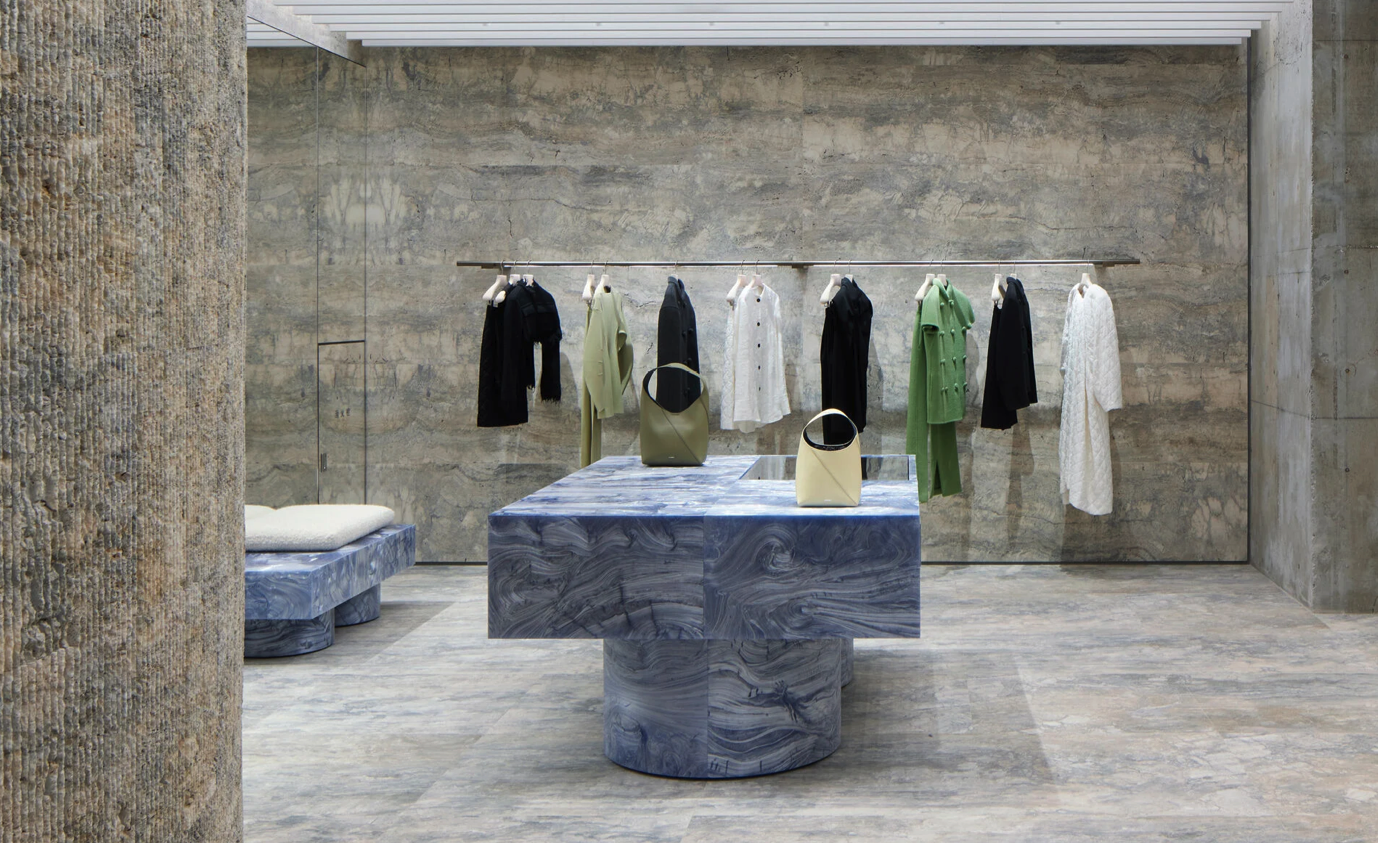
Jil Sander flagship store, Ginza, Japan
As the year comes to a close, we’ve been looking back at what passed through our hands, our machines and our conversations. Not as a highlight reel of finished objects, but as a way to understand how our materials are actually living in the world.
This year, Karlite and Mother of Pearl travelled widely, across sectors, scales and contexts. What follows are a few moments that stayed with us, not because they were the biggest, but because they say something about how we want to work.
Strom Café: Practical Beauty in Everyday Use
For Strom Café in Berlin, we produced Karlite Quartz tabletops designed to meet the pace of daily use. In a café setting, surfaces need to withstand spills, movement and constant interaction without losing their character. Here, Karlite isn’t precious, it’s practical. The material becomes part of a routine, slowly accumulating traces of use rather than requiring replacement.
Bank of England: Material That Tells a Story
The Bank of England project asked a different kind of question: what happens when material carries a story before it becomes a surface? Working with withdrawn banknotes, we developed a custom material for the museum that makes value visible, tangible and slightly uncomfortable. The benches and surfaces don’t disguise their origin; fragments of former currency remain present.
It’s a project that reminds us why we work with reclaimed materials in the first place: not to erase their past, but to let it inform their future.
Refinement through Repetition: Evolving through long-standing Collaboration
Our ongoing collaboration with Jil Sander continues to be an important space for refinement. Working together over time allows us to approach production in a more structured way, developing repeatable methods, stress-testing what already works, and gradually improving efficiency without losing sensitivity.
This continuity gives us room to experiment responsibly: refining processes, sharpening tolerances and deepening our understanding of the material through repetition. It strengthens our craftsmanship, not by accelerating output, but through careful, cumulative improvement in the workshop. While refined in appearance, the material remains robust beneath the surface, designed to endure daily use rather than merely suggest delicacy.
Balancing Design Ambition and Material Logic
One of the more instructive projects this year was our collaboration with Elza Wandler. Developed in Karlite Sienna, the piece was designed specifically for its context, with form and function shaped by the realities of the material itself.
Projects like this remind us that working with recycled plastic is as much about setting clear parameters as it is about creative freedom. Sheet dimensions, joinery and intended use all influence how a design comes together.
It’s through these kinds of collaborations that we continue to sharpen our understanding of where design ambition and material logic meet, lessons that quietly inform everything we make moving forward.
Experiments in the Studio: Feeding Informed Practice
Alongside these collaborations, our own objects, such as the Karlite sculptural pieces developed in the studio, continued to evolve as expressions of curiosity. These works sit outside a client brief and allow us to explore scale, form and presence more freely. In turn, those explorations feed back into commissioned projects in quieter, more practical ways.
Materials Across Scales: Our Commitment to Accessibility and Adaptability
These projects aren’t just moments on a list; they’re part of an ongoing conversation about what design does in the world when material is treated with intention.
From a single café table to museum installations and fashion spaces, the same materials operate across scales without changing their core logic. Karlite and Mother of Pearl aren’t defined by where they appear, but by how they perform over time.
Part of our commitment is investing in our processes so that the materials don’t become exclusive by default. That means keeping order sizes flexible, pricing transparent, and developing collections that can adapt. Whether they’re used in a café, a small studio, a home interior or a global flagship. The scale may change, but the principles stay the same.
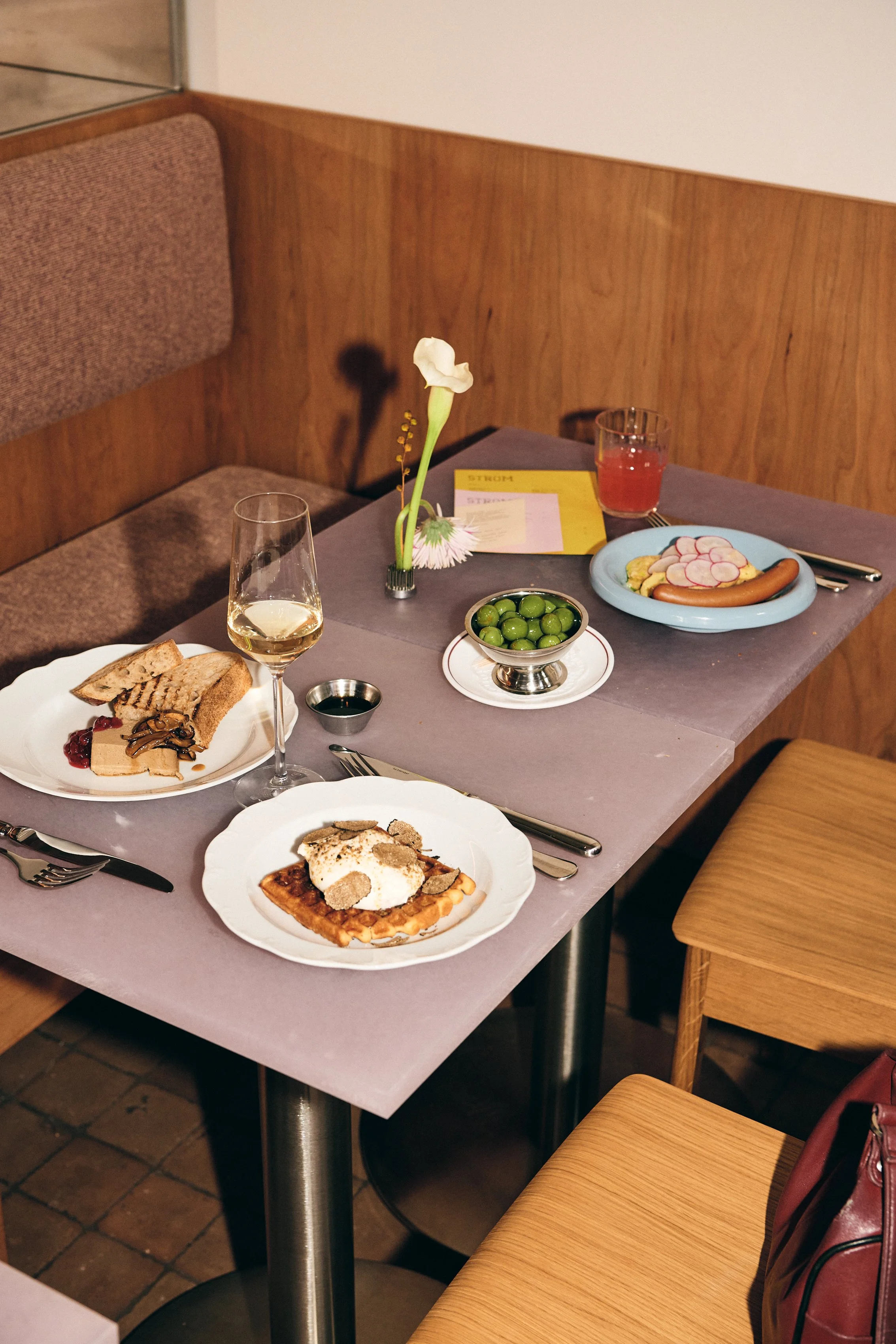
Strom Cafe, Berlin